Friday, May 29, 2020

Okay, Boomer!

Actions not words: what was promised at the UN's landmark climate ...


On September 23, 2019, those attending the United Nations Climate Action Summit in New York City watched as a 16-year-old girl, Greta Thunberg, angrily denounced their generation for passively allowing the world to move to the brink of environmental catastrophe.  Here are some of the most memorable of her remarks:

My message is that we'll be watching you.

This is all wrong. I shouldn't be up here. I should be back in school on the other side of the ocean. Yet you all come to us young people for hope. How dare you!

You have stolen my dreams and my childhood with your empty words. And yet I'm one of the lucky ones. People are suffering. People are dying. Entire ecosystems are collapsing. We are in the beginning of a mass extinction, and all you can talk about is money and fairy tales of eternal economic growth. How dare you!

. . . . You say you hear us and that you understand the urgency. But no matter how sad and angry I am, I do not want to believe that. Because if you really understood the situation and still kept on failing to act, then you would be evil. And that I refuse to believe.

. . . . You are failing us. But the young people are starting to understand your betrayal. The eyes of all future generations are upon you. And if you choose to fail us, I say: We will never forgive you.

We will not let you get away with this. Right here, right now is where we draw the line. The world is waking up. And change is coming, whether you like it or not.

Greta Thunberg had already drawn international attention by the time of this speech:  In early 2018 she had begun organizing climate strikes at her school and, shortly after starting the ninth grade, stopped attending classes for three weeks so that she could stage a daily protest outside the Swedish parliament, demanding that her government abide by its commitment to reduce greenhouse gas emissions in accordance with the Paris Agreement of 2016.  Her activism soon drew worldwide attention, and she was invited in 2018 to speak at the United Nations Climate Change conference.  In early 2019 she participated in various student protests throughout Europe, and in August of that year sailed to the United States from Plymouth, England in a solar-powered boat.  Later that month, she attended a hearing hosted by the U.S. House Select Committee on the Climate Crisis, and gave her fiery speech at the U.N. in New York the following month.  Her reputation, and her following, has continued to grow since then, as she has become something of a living symbol of her generation’s exasperation over their elders’ responsibility for the global environmental crisis, and relative inactivity in addressing it.

A new phrase among the younger generation rose in popularity around the same time that Greta Thunberg and her angry denunciation of previous generations was gaining international attention: “Okay, Boomer”.  It bitterly challenges the wisdom of any remarks made by the “Baby Boomer” generation (those born between the years 1946 and 1964), given the dismal legacy they have bequeathed to those born after them, both in environmental and economic terms.
CO₂ and Greenhouse Gas Emissions - Our World in Data

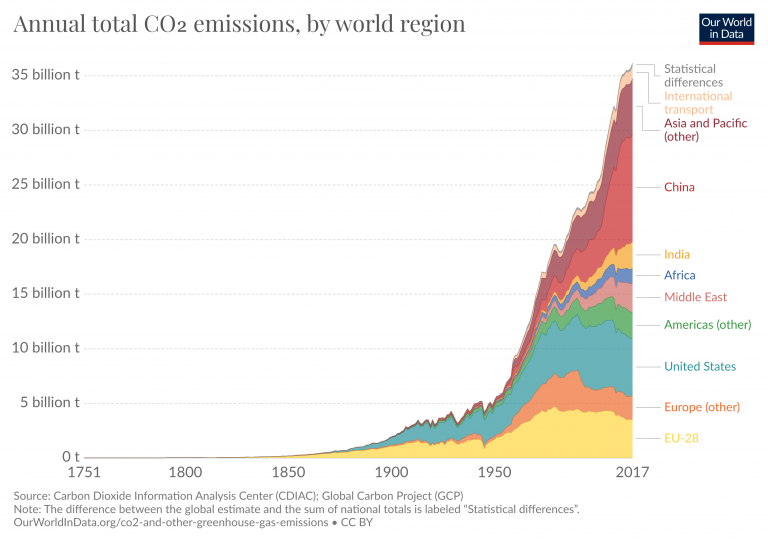
And who can disagree with them?  We are living in a world with CO2 levels at the highest they have been in at least three million years, and about 50% higher than what they were during the millennium preceding the onset of the Industrial Revolution.  Concurrent with this high concentration of greenhouse gas emissions has been a precipitous rise in global temperatures, with six of the hottest years in recorded history having occurred since 2014.  This ecological crisis, of course, is only the most discussed, but there are many others that rival it in severity.  Eighteen million acres of forest are destroyed each year, and presently tropical forests, which once covered 15% of the planet’s surface, now cover only 6-7%.  And then there is the growing pollution of the world’s oceans with sewage sludge, oil, toxic chemicals, and plastics, and if the general endangerment of the ocean ecosystem from pollution isn’t bad enough, there is the decline of marine life due to overfishing, with an estimated one-third of the world’s fish stocks now at risk.  Add to these problems the precipitous growth in endangered species, with more than 900 plant and animal species at imminent risk of extinction, and hundreds of others threatened, and it is clear that we (the present generation of adults and those that preceded it) have done a pretty thorough job of putting the earth’s ecosystem on a trajectory to catastrophe.

But we have also left the younger generations with a huge financial burden, as we’ve sustained our own present standards of living (and provided for our future protection with unfunded social security and medical assistance programs) by relying upon unprecedented levels of borrowing.  In the U.S., private (non-government) debt as a percentage of gross domestic product (a measure of the total goods and services produced in the country) is higher than what it was in the 1930s, during the Great Depression, and public (government) debt has grown to more than 100% of GDP this year: a level not seen since the aftermath of World War II, in the 1940s.  The public debts of many other nations are not far behind, with countries like England, Canada, Spain, France all having levels exceeding 80%, while the levels in Italy, Greece, and Japan surpass even those of the U.S.  (The public debt of Sweden, Greta Thunberg’s home country, is comparatively less egregious, at 37% of GDP.)  As if this weren’t bad enough for America’s youth, students graduating from college these days find themselves saddled with huge burdens of personal debt as a result of skyrocketing education costs: something that most of their parents never had to face.

Our collective attitude towards this disaster of a legacy (or legacy of a disaster) tends to be at least as despicable.  Most of us would rather just not think about these problems, let alone discuss them, and the more militantly obtuse go so far as to deny that the problems exist in the first place.  Looming environmental and ecological crises are labeled as “hoaxes” promoted by agents of a left-leaning, nefarious, political elite, or as the naïve, misguided exaggerations of over-emotional and scientifically-challenged “tree huggers”.  Even the more obvious economic problems associated with spiraling, out-of-control, debt tend to be given short-shrift, even by prominent economists, as it has apparently become unfashionable to suggest that the debt even needs to be reduced.  I remember attending a panel presentation in Washington, D.C. a few years ago that featured a well-known and highly regarded economist.  Because I had heard him make reference in one of his earlier public statements to the huge level of debt that presently exists in this country, I naively assumed that he regarded this as a problem that needed to be urgently addressed, and so I asked him, during the question-and-answer session after the presentation, how he felt the problem should best be handled.  He angrily retorted that he never said the level of debt was an issue that was in urgent need of addressing, adding that this was just the sort of idea that his critics have often tried to associate with him.

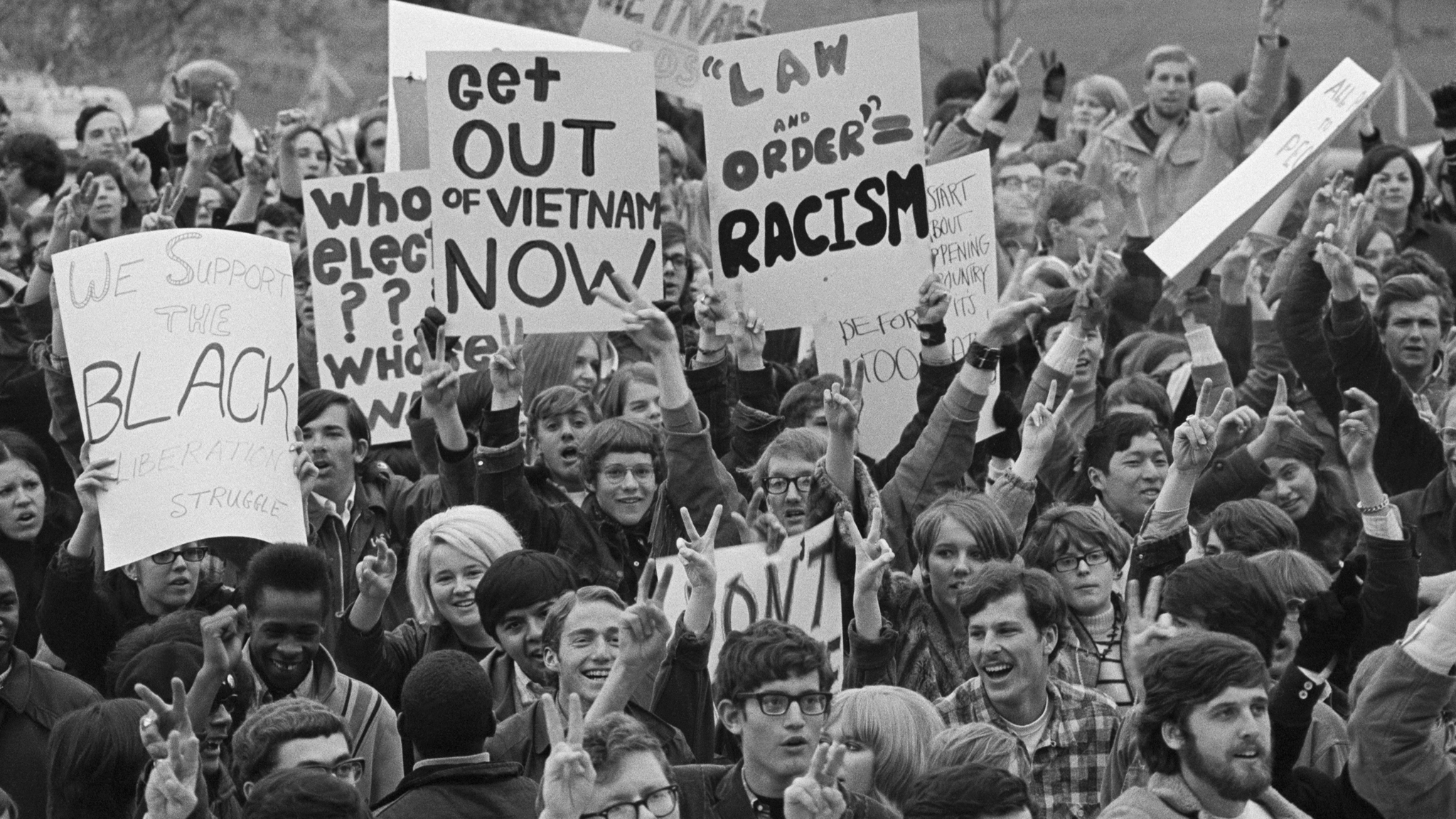
The bitter denunciation of their elders by today’s younger generations interestingly echoes a similar epoch in American history: the 1960s generation, when youths on college campuses and elsewhere collectively rose up in protest against the sins of their fathers and mothers.  Ironically, the youths who made up that protest were Baby Boomers – the very same generation that is being ridiculed and denounced now.  And while those who participated in the counterculture revolution of the 1960s shared with today’s angry youth many of the same negative views of their elders – that they are insular, short-sighted, and selfish – the protesters of the Sixties went even further:  With their catchphrase “Don’t trust anyone over thirty”, they were implying that those of the older generation were evil as well – a charge which Greta Thunberg, at least, has been reluctant to include among her invectives against us.
Nixon and Johnson Pushed the CIA to Spy on U.S. Citizens ...

Those who participated in the protest movements of the 1960s left an enduring positive legacy: making monumental strides in the advancement of civil rights, turning the tide of popular opinion against the mandatory conscription of young men to participate in pointless overseas wars, and in breaking down a general cultural tendency toward stifling social conformity.  Environmentalism also rose in the national consciousness as well, as exemplified by the annual global observance of Earth Day on April 22, which had originally been proposed in 1969 by John McConnell, a peace activist, and which culminated in new regulations and legislation all over the world that addressed conservation and ecological issues.

Clearly, however, whatever positive legacy that came out of the turbulent 1960s was not enough to prevent the crises – ecological, social, and economic – that face our world now.  Was the social activism that Baby Boomers engaged in during their youth a failure, then?  Or was it undone in the decades that followed?

I know that it is convenient to think in terms of a “backlash”, particularly if this would allow the transference of blame to some other, younger, generation.  It is all too easy to point out the election and popularity of President Ronald Reagan in the 1980s as evidence of this.  A popular situation comedy in that decade, Family Ties, about a set of idealistic parents who had been part of the Sixties counterculture movement, now dealing with a son who admires Reagan, reads the Wall Street Journal, and aspires to be a successful corporate capitalist, exemplified this idea.  But this explanation is much too facile, and doesn’t bear up to closer scrutiny.

First, it is naïve to paint any generation with a broad brush and assume that all, or even most, of the members of that generation conformed to some particular political view or held certain attitudes in common.  The hippies, student protesters, and other youthful activists, while more visible than their peers, particularly in the media, represented only one extreme of a spectrum of social and political attitudes among them.  (Richard Nixon was not off the mark when he spoke of a “silent majority”, which even existed among the young at that time.)  And it is likely that the actions of many back then – particularly in the music industry – were motivated more by self-aggrandizement then by a genuine desire for positive social change.  Unfortunately, the same can probably be said of Greta Thunberg’s fellow millennials – many if not most of whom exhibit the same apathy, self-involvement, and lack of engagement as the older generations that she decries.

And second, I think that what happened after the Sixties was more of a dissipation of active social engagement rather than a reaction to it.  I remember well the decade that followed, as this was the one in which I entered my own teen years.  There was a general feeling that something remarkable had happened in those preceding turbulent years, and that perhaps it represented the birth of a new age, which would continue to unfold.  Among the more idealistic of those Americans who were coming of age in the 1970s (and these were still members of the Baby Boom generation, but born in the later years), there was a sense of obligation to somehow carry on the legacy of the Sixties, into a new phase of social reform and evolution.  But with the Viet Nam War ended, and the resignation of a president who had come to be seen as antithetical to everything that the Sixties had stood for, there were no focal points of public protest – nothing that could sustain the fury and enthusiasm which had motivated the youth during the previous decade.  By the end of the 1970s, what emerged, as a consequence of this, was a growing sense that the next phase should involve a turning inward, and a focus on personal enlightenment which, as it expanded to include more and more people, would reach a sort of critical mass that would naturally lead to a better world: with greater harmony among persons and between the human race and the environment.  This new ideal was eloquently expressed in Marilyn Ferguson’s 1980 book The Aquarian Conspiracy.  In its opening chapter she writes:

A leaderless but powerful network is working to bring about radical change in the United States.  Its members have broken with certain key elements of Western thought, and they may have even broken continuity with history.

This network is the Aquarian Conspiracy.  It is a conspiracy without a political doctrine.  Without a manifesto.  With conspirators who seek power only to disperse it, and whose strategies are pragmatic, even scientific, but whose perspective sounds so mystical that they hesitate to discuss it.  Activists asking different kinds of questions, challenging the establishment from within.

Broader than reform, deeper than revolution, this benign conspiracy for a new human agenda has triggered the most rapid cultural realignment in history.  The great shuddering, irrevocable shift overtaking us is not a new political, religious, or philosophical system.  It is a new mind – the ascendance of a startling worldview that gathers into its framework breakthrough science and insights from earliest recorded thought.

It has been decades since I read Marilyn Ferguson’s book (with much enthusiasm, if I recall), and so I can’t speak to the elements of her particular program, but I do remember the general features that tended to characterize many if not most of the “Aquarian” movements that stressed personal change and transformation as a vehicle for general social reform.  They tended to draw from a grab bag of Eastern religions and mysticism, pop psychology, drugs (psychedelics for enlightenment, pharmaceuticals for the treatment of conventional psychological impediments like depression and anxiety), nutrition, exercise, occultic beliefs and practices, self-hypnosis and auto-conditioning, and novel scientific theories – of varying degrees of legitimacy – incorporated into new world views.

10 Crazy Facts Behind New Age Practices - Listverse

Some might find it ironic that – instead of being remembered as the decade in which an Aquarian-style mass personal transformation occurred – the 1980s is now best remembered for being the age of the “Yuppie” (young, upwardly-mobile professional), when, in the 1987 movie Wall Street, for example, Gordon Gecko boldly declares that “Greed is good”.  But I’ve always seen a certain logic in this, rather than an irony.  After all, if the road to general social improvement is by maximizing one’s human potential, then how better to achieve this objective than by maximizing one’s personal standard of living, first?

It seems that all that has survived from that idealistic program of self-transformation are certain relics, such as the self-help, “pulling your own strings” gurus who still appear from time to time on public television subscription drives, and whose books grace the stands of airport bookstores; the quasi-religious, quasi mystical audio and video series that promise practical enlightenment; and the occultic books and artifacts sold in the “New Age” section of bookstores and retail websites.  And of course a cornucopia of pharmaceutical drugs have evolved over the past half century to correct any mental impediments to personal happiness – real or imaginary.

Perhaps a fraternity of genuinely enlightened “Aquarian conspiracists” did emerge from the 1970s and 1980s, but if so, they apparently never reached that critical mass which would produce general, positive social transformation, or have yet to do so.  And if the fraternity does exist, I certainly must have failed to make the grade, because I never received an invitation to join.  It must be very well concealed, in fact, because I am not aware of any of its members among my friends, relatives, or even casual acquaintances.

And I’ve become cynical, over the years, about how effective personal enlightenment would be as a vehicle for saving the world.  I don’t think that I am the first to feel such cynicism.  In his 1934 book A Search in Secret India, British author Paul Brunton described his quest to find genuine spiritually enlightened sages among the Hindu yogis, Moslem fakirs, mystics, and other holy men in India.  But while he did encounter men and women who exhibited remarkable insights and abilities, suggesting that they had indeed tapped into some profound higher spiritual power, he was generally exasperated by the fact that these sages tended to spend most of the hours of any day sitting in blissed-out trances, seemingly oblivious to the world around them.  If they did find genuine enlightenment, it seemed to be of a very self-indulgent sort.  With few exceptions, these sages seemed markedly unconcerned about how to improve the general condition of political and economic life in India, and when Paul Brunton pressed them for practical advice to take back to Europe, which had descended into chaos after World War I, they merely urged him to know himself.

But this idea that some sort of self-transformation is necessary to fix civilization, and ultimately fix the world, is really a carry-over of an older belief that we have all been somehow corrupted or degraded by civilization itself.  There is a tendency to believe that there was once a Golden Age, when we lived in harmony with nature, and with each other, but that something happened during the course of civilization that fundamentally changed us in a pernicious way, making us more greedy, belligerent, and exploitative, setting us against each other, and against nature itself.   The idea dates at least as far back as the Enlightenment, when Jean Jacques Rousseau declared that “Man is naturally good, and it is by his institutions alone that men become evil.”  In his essay “Discourse on the Sciences and Arts”, written in 1750, Rousseau argued that the progress of civilization led to the corruption of morals.  Of course, there were earlier incarnations of this idea, with romanticized conceptions of the “noble savage” in less civilized regions of the world, and the Judeo-Christian belief in a fall from grace in the idyllic Garden of Eden.

Jean-Jacques Rousseau: as relevant as ever | Theo Hobson | Opinion ...
Jean Jacques Rousseau

Most of Rousseau’s fellow Enlightenment thinkers did not share this view, and Voltaire, in particular, was especially hostile to it.  When Rousseau published a subsequent essay titled “Discourse on Inequality” in 1755, in which he argued that the commercial society of his day was fundamentally immoral, Voltaire wrote to him:

I have received your new book against the human race, and thank you for it.… No one has ever employed so much intellect to persuade men to be beasts. In reading your work one is seized with a desire to walk on all fours. However, as I have lost that habit for more than sixty years, I feel, unfortunately, that it is impossible for me to resume it…

Voltaire had written, nearly twenty years earlier, a satirical poem, “The Worldling” that mocked both the secular and the religious views of the fall from grace.  In it, he writes:

Do you our ancestors admire,
Because they wore no rich attire?
Ease was like wealth to them unknown,
Was’t virtue? ignorance alone.
Would any fool, had he a bed,
On the bare ground have laid his head?
My fruit-eating first father, say,
In Eden how rolled time away?
Did you work for the human race,
And clasp dame Eve with close embrace!
Own that your nails you could not pare,
And that you wore disordered hair,
That you were swarthy in complexion,
And that your amorous affection
Had very little better in’t
Than downright animal instinct.
Both weary of the marriage yoke
You supped each night beneath an oak
On millet, water, and on mast,
And having finished your repast,
On the ground you were forced to lie,
Exposed to the inclement sky:
Such in the state of simple nature
Is man, a helpless, wretched creature.
Would you know in this cursed age,
Against which zealots so much rage,
To what men blessed with taste attend
In cities, how their time they spend?
The arts that charm the human mind
All at his house a welcome find;
In building it, the architect
No grace passed over with neglect.

But if civilization is not to blame – if we are no less moral than our earliest ancestors – then what is responsible for the ecological crisis that Greta Thunberg decries: what brought it about? 

The answer is actually a very simple one:  There are too many of us – too many human beings – on this planet.  It has been estimated that there is a total of 15.77 billion acres of habitable land on the earth.  Given that there are presently about 7.8 billion persons alive today, this works out to nearly exactly two acres of habitable land per person.  It sounds like a generous endowment, but if one remembers that within this two acres per person, provision must be given for producing food, shelter, and the other necessities – not to mention the amenities – of life, the space seems a little more parsimonious.  And then, when one also remembers that somehow these allotments of space must be used to accommodate the better part of a distribution of 8000 species of birds, 4000 species of mammals, 900,000 species of insects, and about 300,000 species of flowering plants, mosses, and trees, it is obvious that things will get a little crowded, to say the least.


            Global overpopulation is a serious, serious problem, but it has not arisen due to any general moral failing.  The very definition of what it means to be a living thing – the essence of life itself –is to compete for resources, consume them, grow, thrive, and reproduce.  Hence, rather than being some monstrous abortion that has poisoned and critically wounded Gaia, mother Earth, humanity has merely played out its intended role in the web of life.  Its sin – if sin it can be called – is that it played the game of life more faithfully and more successfully than any other species on the planet.

And so – remarkable human being that she is – if there had been a million Greta Thunbergs living amongst us Baby Boomers in the 1960s and 1970s – in Europe, America, Asia, and even in the developing countries – I doubt that they would have fundamentally altered the trajectory that led to the current state of the world.  Perhaps some additional enlightened environmental policies would have been adopted, like the Montreal Protocol of 1987 that limited global production of chlorofluorocarbons (CFCs) which had been depleting Earth’s protective ozone layer, but these would have addressed the secondary effects of overpopulation, and not the root cause itself.

I can think of only six ways that might cause a reversal of global overpopulation, and most of them are unsavory.  The first is as the result of ecological or environmental catastrophes on a large scale, such as famine, water shortages, global warming and its consequences, or global pandemics.  Closely aligned with the first is human-induced catastrophes provoked directly by overpopulation, or indirectly by one or more of the natural disasters outlined above.  These could include widespread civil unrest, mass destabilizing migrations, acts of extreme terrorism, and large-scale wars.  Third, governments could take draconian measures to keep their populations under control, ranging from compulsory birth control, to forced sterilizations, to forced abortions, and finally, in the most extreme case, to the elimination of living members of the citizenry.  These all sound monstrous, of course, and beyond contemplation, yet how many of us, if we’re completely honest with ourselves, can deny that in our darkest moments, at least, we’ve wondered if the world might be better off if it was rid of certain elements of the population, such as violent and unrepentant criminals, persons prolifically producing children that they are unable or unwilling to care for, and persons who, although able-bodied and able-minded, seem content to live on the dole, as social parasites, supported by friends, relatives, or government support obtained under fraudulent circumstances.  But the definition of “Unproductives” or “Undesirables” would have to become extremely broad – not to mention increasingly arbitrary and subjective – before such a policy would make any appreciable impact on reducing population, and in the process, we would all inevitably be shocked and horrified to discover the names of persons we care for appearing on that list, and possibly eventually the appearance of our own names as well.  (As a recent retiree, I would have to worry about that as a real possibility.)  And while totalitarian governments have proved themselves to be brutally efficient in reducing populations, they have generally not done so on the basis of “objective” criteria, but, as in the case of the Nazis, based upon things like ethnicity, religious affiliation, and sexual preference, or in the case of the Stalinist Soviet Union and other Communist nations, as the result of indiscriminate mass starvation and the execution of political enemies.

A fourth means of reducing overpopulation would be to engineer a mass exodus from planet Earth, with the goal of colonizing other worlds.  But in spite of the enthusiasm for extraterrestrial colonization by wealthy entrepreneurs such as Elon Musk, this option will remain confined within the realm of science fiction well into the future.  A fifth means would be the result of the introduction of an apex predatory species that could cull the human herd down to ecologically sustainable levels, as has actually been done to contain ecological imbalances involving other animals, but again this puts us well into the realm of science fiction and fantasy.  (Science fiction, of course, has taken some even darker paths in speculating about how humanity might deal with the population crisis, but I will leave those to the authors of that genre.)


The sixth – and most effective – means for population control is, ironically, the most benign, and that is to raise the general standard of living.  Adam Smith (another Enlightenment critic of Rousseau) was one of the earliest champions of commerce as a means of improving the general welfare, and economists of later generations observed the link between economic development and falling fertility rates.  Today, in fact, nearly half of the global population is living in developed nations (including Japan, Russia, Hong Kong, and nearly all of the countries in Europe) where the fertility rate has fallen below the replacement level.  But this leads to the further irony that among these nations the low fertility rates have created an economic challenge, as the declining numbers of younger workers create an increasing burden upon them to support their aging elders.  As a consequence, countries are relying increasingly upon deficit spending policies to provide for the welfare of their older citizens, leading to the second of the twin evils – national debt – which I described at the beginning of this blog.  And in spite of this, the world’s population continues to grow, with the total projected to reach 11 billion by the end of this century (bringing that per person land allotment down to 1.4 acres).  This growth, of course, is going to occur in the poorer regions of the globe, creating even more instability and migration pressures.

When I am faced with facts and statistics like these, my immediate reaction is one of despair, and futility.  What could we in my generation have done differently?  And, more importantly, what can all of us do, now?  I sometimes try to console myself with the thought that if consciousness – and human consciousness in particular – is not just some accident of physics – if it is evidence of a Divine agency at work in the universe – then surely, in spite of the succession of crises and tragedies that have made up our collective history, the story of humanity will ultimately have a happy ending.  But both of these attitudes – pessimism and desperate optimism – lead to a dangerous posture of passivity – even apathy.  Why change, or try to effect change, if the ultimate outcome is out of my – out of our – hands?

And, too, blaming all of our social and ecological problems on overpopulation may be too simplistic.  After all, it is the developed nations and advanced economies of the planet that are responsible for the majority of toxic emissions and other pollutants that are poisoning the ecosystem.  China, the United States, and the European Union together currently produce more than half of all production- and consumption-based greenhouse gas emissions, and the high and upper middle income regions of the world produce about two-thirds of global solid waste.  Even if Rousseau was wrong in declaring that civilization and commercial society has made us evil, can we at least concede that it’s made those of us living in the more affluent nations a little more selfish, careless, and lazy, not to mention wasteful?  Our food chain in the U.S. and other nations is dependent upon factory farms, where the animals – which are generally no less intelligent than our family pets – are subject to horrific conditions that, if we saw a neighbor’s pet treated that way, would prompt us to report them to the local humane society, and perhaps even to the police.  To say that these are a necessary evil in order to provide for our food requirements is a hollow argument, particularly in the U.S., where obesity is a national epidemic, and where per capita meat consumption is the highest in the world and more than twice the global average.  These troubling facts have often caused me to consider going vegetarian, but I just can’t resist having that next cheeseburger, or piece of fried chicken, or slice of sausage pizza.  It reminds me of that story about St. Augustine, when he was beginning to feel the stirrings of a religious calling, but still reaping the benefits of a lustful life.  “Lord make me chaste,” he prayed, “. . . but not yet!”

We who live in the more advanced nations of the world have tended to fall back upon another rationale for inaction, which is that the same economic forces that have contributed to our affluence have also protected us from any of its negative consequences, at least environmentally speaking.  We can produce, and consume, and consume some more, to our hearts’ content, and never have to worry about the garbage not disappearing.  We are smugly reminded that dire predictions of environmental or ecological catastrophes made over the past several decades never came to pass, and some of these were spectacularly wrong.  The forces of free market economics, aligned with technological development, it is argued, will continue to make any alarmist predictions about future disasters nothing more than foolish fables.  But physicist Geoffrey West, in his 2017 book Scale, makes a compelling case for why these forces are finally reaching the limits of their capability for pulling us back from the brink.  Observing that innovation has saved us only because the pace of innovation has been accelerating, he concludes:

. . . The concept of business and economic cycles, and of implied cycles of innovation, has been around for a long time and is now standard rhetoric in economics and the business community, even though it is primarily based on broad phenomenological deductions with little fundamental theory or mechanistic understanding. It is implicitly taken for granted, and often taken as unquestioned dogma, that as long as human beings remain inventive we will stay ahead of any impending threat by continuous and ever more ingenious innovations.

Unfortunately, however, it’s not quite as simple as that. There’s yet another major catch, and it’s a big one. The theory dictates that to sustain continuous growth the time between successive innovations has to get shorter and shorter. Thus paradigm-shifting discoveries, adaptations, and innovations must occur at an increasingly accelerated pace. Not only does the general pace of life inevitably quicken, but we must innovate at a faster and faster rate!

We will soon reach a point where we simply cannot innovate fast enough to protect us from the adverse consequences of our own growth.

Geoffrey West: The growth paradigm: Innovate or collapse - YouTube
Geoffrey West

Returning to Greta Thunberg and her angry denunciation of the generations that came before hers, I can only say that while I sympathize with her and understand why she and her contemporaries are both extremely outraged and deeply concerned, I honestly don’t know what those in my generation could have done – when we were her age – to fundamentally change the course of events as they unfolded over the past several decades.  And of much greater concern to me personally is that I don’t know what I should do now.  If collective social action cannot be sustained, and profound, personal enlightenment is a fool’s errand, if not an outright sham, then how should we – how can we – change to save the world?

When I began this blog, more than seven years ago, its general theme was based on the questions: “What lessons can our civilization impart to some distant future civilization, long after ours has ceased to exist?  What truths can we pass on, about what we did right, but, perhaps more importantly, what we should have done differently?”  The second question now looms particularly large, as it seems that the existence of our civilization is genuinely in jeopardy.  And I am ashamed and embarrassed to say that it has left me completely stumped.

You have my deepest and most profound admiration, Greta, and I still desperately hope that your generation and mine can work together to come up with an answer to that question, before it’s too late.

Tuesday, October 15, 2019

Mass Absurdity


            One of my all-time favorite books is titled Extraordinary Popular Delusions and the Madness of Crowds.  Written by Charles Mackay in 1841, it chronicles some of the worst, the silliest, and the most notorious cases of mob psychology and mass hysteria of earlier centuries, including the witch-hunting mania, the Crusades, the popularization of bogus holy relics, and a variety of economic bubbles and crashes.  Of this latter, the most blatantly silly was the tulipomania craze in 17th century Holland, when otherwise rational people spent small fortunes on single tulips, simply because it was the fashion of the time to do so.  My copy of the book has just a single endorsement on the back cover, by Bernard Baruch, who wrote, “This book has saved me millions of dollars.”  Bernard Baruch was an early 20th century financier, investor, and philanthropist who served as an adviser to U.S. Presidents Woodrow Wilson and Franklin D. Roosevelt.  He was also one of the few investors who survived the Wall Street Crash of 1929 and the Great Depression with his wealth intact.


Sadly, Mackay’s work proved to be not only a piece of interesting history, but prophetic as well, as the century-and-a-half that followed its publication would see an economic collapse that would make the ones that he described pale in comparison, and movements led by political demagogues that resulted in mass murders, wars, and other abuses of a scale far beyond that exhibited by the witch-hunting craze and the Crusades.  But what is even more intriguing is that if one surveys the cultural landscape in which we currently live, one can see that it doesn’t require a demagogue, religious fanaticism, greed, racism, or mass hysteria to produce general insanity.  On any calm, clear day, we’re practicing absurdity on a large scale, in a variety of interesting, though mind-numbing ways.  In fact, an outsider who looked in on our culture would probably be tempted to declare, as one U.S. national politician recently said about another, that we are “not playing with a full deck”.  Here are some of my favorite examples of “mass absurdity”.

Daylight Savings Time


                Twice a year, people in America, Europe, and other parts of the world change their clocks.  On some early morning in the springtime, at 2:00, we all start pretending that it is 3:00 instead, and, later, in the fall, we abandon the pretense, so that 3:00 becomes 2:00 again.  (It’s a little like collectively deciding that we will call things of a certain color, like roses, red part of the year, and call these same things blue another part of the year.)  Daylight Savings Time, which most of us now take for granted, has only been in existence for about one hundred years.  It was first seriously proposed by George Hudson, a New Zealand entomologist in 1895, who personally valued the extra leisure time after his day job to collect bugs in the summer months.  The proposal was later championed by an Englishman, William Willett, who also had his own personal reasons for wishing to see it adopted: he was an avid golfer and wanted more time for his golf game in the evening.  But it was during World War I that the idea was finally embraced and enacted into law by the combatants (first Germany and its allies, and then Britain and its allies) in order to conserve energy.  The practice continued among many of these countries after the war ended, and most of those who abandoned it reinstituted it in World War II.  Energy conservation, in fact, continues to be one of the main justifications used for continuing Daylight Savings Time, but studies over the years have shown that the actual savings resulting from it are negligible, and may be more than offset by the other costs associated with the inconveniences of having to change the clocks twice a year and adjusting to this change.  Nevertheless, while most of us grumble about it (particularly in the springtime), we have come to accept it as “normal”, and meekly submit to the practice.

The Thirteenth Floor


                Several years ago, when I was attending an industry conference at a large hotel in another city, I was surprised to get a room at a rate that seemed unusually low for a hotel of that caliber.  I had not used any of the discount services now so widely available, although I do think that I was late in making my registration.  The hotel clerk at the registration desk seemed nervous as she handed me my room key.  I looked at the room number.  It was 1305.  When I looked back up at the room clerk, she seemed to be preparing herself for an angry reaction.  She was probably shocked when she saw me break out into a smile and happily accept the key.  In fact, I had to restrain myself from shaking her hand, and even giving her a hug.  Here, in 21st century America, I was actually overjoyed to find a hotel that was not afraid to have a 13th floor. 
               
                It always sickens me to get onto the elevator of a modern high rise hotel – or any building for that matter – and see the button for the 12th floor followed by the button for the 14th floor.  The incongruency of all of the contemporary high-tech electric conveniences and other marks of ultra-modernity in a building that still caters to this silly superstition is stark and unsettling.  What exactly are the owners afraid of?  Do they really believe that some terrible thing – like a fire or an explosion – will more likely occur on a floor with the number 13, and perhaps only on that floor?  Do they think that the entire hotel will be cursed?  Or that something terrible will befall the hapless occupants who take a room on that floor, either during their stay or immediately afterward?  It might be a more pragmatic concern, with hotel management simply afraid that an entire floor will be left unutilized, because few people would want to occupy it.  I hope that they’re wrong about that.  I would like to think that most of the people I know would be just as happy to stay on the 13th floor as I was, and find the absence of that floor just as silly.  I suppose we can take some consolation that we in the West are not the only ones who harbor such silly superstitions.  China, Japan, and other Asian nations have a similar irrational terror of the number 4.  In fact, it is not uncommon for hotels in Asia to be missing the 4th, 13th, and 14th floors!  Restaurants with numbered tables there also often omit a Table #4.    

I should mention that I had a very pleasant time at that conference, and enjoyed a safe and comfortable airplane flight there and back.  I don’t know if the hotel management ever sent me a survey about my stay, but if they did, I hope I sincerely congratulated them on their decision to be boldly – and defiantly – rational.

Grass

Related image
No, I’m not referring to the plant that is now legal for recreational use in eleven U.S. states, but to simple, common, lawn grass.  Most people don’t know that this type of grass is an invasive species, which hails mainly from Europe and the Middle East, and was brought over by colonists to North America in the 17th century.  But unlike most of the invasive species in the U.S. that we read about, like the pythons lurking in the Florida Everglades, kudzu vines smothering trees and bushes in the South, tree-killing Emerald ash borers, and of course the infamously ubiquitous Norway rat, grass would probably not have thrived or even survived were it not for the constant and fanatical mollycoddling that it receives from landowners.  With its shallow root system, this pathetically tender little plant would just not be hardy enough to handle the extremes of temperature and wide variations in precipitation that are characteristic of the North American climate.  As a consequence, more than $40 billion is spent each year on pesticides, weed killers, and fertilizer to keep grass healthy and alive (killing about 7 million birds a year in the process), and the average homeowner spends 150 hours annually to maintain their lawn.  Water requirements are just as steep, averaging about 200 gallons per person per day.  And the real absurdity behind all of these massive expenditures is that they are done in the service of the blandest sort of social conformity, so that homeowners can have perfect, rectangular patches of green that match those of their neighbors.  And Heaven forbid that these patches might be “infested” with things like clovers or flowering native plants, which of course sustain the local population of bees and other wildlife.  But the perfect lawn must not only be pure and untainted with local flora: the blades must never exceed an inch and a half in length, and the lawn itself must be neatly edged.  Consequently, on a typical summer day, one can hear the cacophonous roar of dozens of gas-guzzling lawn mowers and other equipment, in their neighborhood alone, spewing carbon dioxide and noxious fumes into the air.  (74,000 injuries a year occur due to lawn mowers: about the same number caused by firearm accidents.)  To borrow (and mangle) a famous line of Churchill’s:  “Never in the fields of human endeavor have so many spent so much, with such toxic consequences, for something so stupid.”

Green Bottle Beer

Image result for green bottle beer skunky

I can’t remember when I first discovered Heineken beer.  It was in an era long before craft beers and microbreweries.  I just remember what a refreshing change it was from the mainstream beers that dominated the market at the time: Budweiser, and Miller, and Pabst, and Hamm's.  As an import, it cost more than the domestics, of course, but the taste made it all worth it.  Or so I thought.  But then something terrible happened.  This memory, unfortunately, is more vivid, because it has happened so many times since.  It is the memory of uncapping a green bottle of Heineken, and, instead of experiencing that refreshing taste of a premium beer, confronting what can only be described as a putrid skunk-like assault on the nose and the palate – what I would come to recognize as the characteristic evidence of spoilage.  I would eventually learn that this is symptomatic of beers that are sold in green and clear bottles, because these allow ultraviolet (UV) light to pass through and cause a chemical reaction that produces sulfur-based compounds not unlike those which a skunk sprays on its would-be attackers.  Time and time again I would open a bottle of Heineken, with great anticipation, and, more often than not, it seems, I would find myself drinking a foul-tasting liquid.  I felt like the comic book character Charlie Brown, whenever he would run up to kick a football, only to have it lifted up at the last minute by his perennial tormenter, Lucy, leaving him to fall flat on his back.  Lucy always promised that this time would be different – that this time she would not pull the prank – but every time that Charlie Brown believed her, he would end up flat on his back again.  Why would a company sell its product in a container that ruined its taste?  And, more to the point, why do consumers, like me, continue to buy the product, in spite of being regularly disappointed?  Sadly, I think that there is actually a psychological explanation for both of these mysteries.  In the 20th century, behavioral psychologists, like Ivan Pavlov, discovered that an animal, when given a treat, could be conditioned to exhibit a certain response when rewarded with that treat, but could also be trained to give the same response to some other stimulus that occurred at the same time that the treat was provided, like the ringing of a bell.  Eventually, the ringing of the bell itself could produce the desired behavior, and would continue to do so, as long as the treat itself just occasionally accompanied the bell.  Like Pavlov’s dogs, fans of beers that are packaged in green and clear bottles will still spend money on these products, apparently even after many bad experiences with them, as long as they get the taste reward that they are seeking once in a while.  And the sellers of these beers, who believe that green and clear bottles are more visually appealing (as opposed to brown glass, which, ironically, actually shields beer from the effects of UV light), can rely on the fact that only the occasional reward of a good taste will keep their consumers coming back.  I am ashamed to say how many years I continued to succumb to the temptation to buy Heineken beer in green bottles until I finally said, "Enough!".  But even in my case, I could not completely give it up.  A few years ago, I returned to it, but now I only buy it on tap or in cans. 

Circumcision

Related image
This next one will generate a little controversy, I suspect, but still is a worthy member in this “gallery of the absurd”.  In recent decades, there has been a growing movement to ban the practice of female genital mutilation that is prevalent in many African nations.  Formerly referred to as “female circumcision”, the phrase “genital mutilation” was adopted by critics of the practice in order to distinguish it from what was apparently regarded as a more benign practice involving males.  But what is often ignored or overlooked is that even male circumcision is a form of genital mutilation, and while the particular procedure that is performed on females is admittedly more pernicious in its consequences, this is a difference in degree and not in kind.  One cannot help but suspect that the extreme (although justifiable) vitriol directed against the female version of the practice, as sharply contrasted with the general apathy, if not outright endorsement, of its male counterpart, is fueled in part by the fact that the former practice is common among African nations, and among Moslems (although the procedure is not required by Islam), thus inviting condescension among white Europeans and Americans as something stemming from outmoded primitive traditions and religious extremism.  There are three general schools of thought regarding male circumcision: 1) that it is actually a healthy practice, as the male foreskin serves no useful purpose and may even present health risks, 2) that while conferring no health benefits, circumcision is harmless, and 3) that it does present some impairment to male sexual response, but this is relatively minor, and is certainly not missed by the male if he is circumcised as an infant, which is the standard practice.  But even the first, most benign interpretation of the practice invites criticism, since there are other organs of the human body which are regarded as serving no useful function while presenting potential (even fatal) health risks, such as the tonsils and the appendix, that are never removed unless these risks actually materialize.  One cannot help but suspect that the medical justifications for male circumcision are actually legitimizations after the fact for a practice that is actually grounded in religious and cultural traditions.  I for one would find the argument for health benefits far more convincing if I knew of an adult uncircumcised physician who voluntarily underwent the procedure after having been convinced of these benefits.  And as regards the religious grounds for circumcision, as the physical manifestation of a special covenant with the Creator, it would seem (to me, anyway) more appropriate to postpone this procedure until the time when a person can enter into this covenant voluntarily as a mature adult.  The usual explanation for why this is not done is because the procedure is much more painful to undergo as an adult.  I wonder, though, how much less painful it is for an infant, and of course we will never know since an infant cannot communicate the extent of their suffering, distress, and possible trauma.  And those of us who have undergone the procedure as infants will never know what we have lost.  In any case, I find the general acceptance of male infant sexual mutilation in the West existing side-by-side with the general abhorrence of female sexual mutilation in other cultures to be one of the most egregious examples of cultural relativism existing among us today.

High Heels

Related image
Doctors are pretty unanimous that the wearing of high heels is detrimental to a woman’s health, and in a variety of ways.  There is the obvious risk of developing hammertoes, calluses, and bunions, not to mention ankle sprains and weakened calf muscles, but high heels can also cause lower back pain, knee pain, and even a type of nerve damage called foraminal stenosis.  They contribute to improper breathing, which in turn can cause damage to the vocal chords.  Some doctors have even gone so far as to suggest a link between wearing high heels and the incidences of certain types of cancers.  Clearly, this social custom is not as barbaric as the old Chinese custom of foot-binding, but one wonders if here, too, it is merely a difference in degree rather than in kind.  Ironically, when high heels were first invented, they were designed for men, and actually had a practical application.  Persian warriors on horseback in the 10th century wore them for stability so that they could easily stand up in their stirrups while shooting their bows and arrows at enemies.  (The modern cowboy boot is a direct descendant of this design.)  When Persians brought them to Europe in the early 17th century, male aristocrats and even members of the royalty wore them as a symbol of their “upper” status, with the length of the heel literally corresponding to a man’s place in the social hierarchy (“1-and- a-half inches for knights, 2 inches for nobles, and 2-and-a-half inches for princes”, according to one prescription).  Women gradually adopted the style for themselves, and by the early nineteenth century, high heels were exclusively worn by women.  But women today make no secret of the fact that wearing these things tend to be painful, so why do it?  One possible reason is the effect that they have upon men.  They really are a sort of visual catnip to most men: a woman who might ordinarily not get a second look from a particular man will often get an admiring gaze from the same man simply by wearing high heels.  And the “catnip” effect is not only visual: even the loud “clickety-click” sound of a woman walking in heels will tend to turn male heads.  I experienced embarrassing direct evidence of this years ago, when I was wearing shoes with hard soles.  Because I walk with a very brisk gait, the sound that I made in these shoes was very similar to that of a woman walking in high heels.  And I found, when walking into my office from the parking lot each morning, that it was not unusual for any man walking ahead of me, within earshot, to come to a complete stop, turn around, and look at me.  I got so tired of being a regular source of disappointment to so many of my male coworkers that I adopted the practice of wearing rubber-soled shoes.  Perhaps, then, this social custom is not so “absurd” after all.  Even women often confess to a sort of fetish in their zeal to shop for and collect high heels of various colors and designs.  Hence, high heels might actually represent a vice (but only when they are worn voluntarily, and not in compulsive conformity with outmoded dress codes), rather than a pointless practice, and the indulgence in vices, while often risky and even toxic, are grounded in the logical behavior of self-gratification.  And I should add that I would be a terrible hypocrite if I did not admit that the day high heels are banned, or women universally decide to abandon them, will be a very sad day in my life.

These, then, are my top choices for the “gallery of the absurd”.  In a world that so often seems to succumb to lunacy, in so many different ways, and which leaves us perennially baffled, these examples provide a constant reminder that evidences of our capacity for irrationality are always out there, right in front of us, if we only open our eyes to see them.

Thursday, March 7, 2019

The Invisible Hand

Recently, I happened to finish a book that had been sitting, unread, on one of my bookshelves for decades.  It had been given to me (possibly loaned to me, I’m embarrassed to say) by a coworker, who warned me that I might be put off by the graphic depictions in the book’s opening paragraphs.  They described how a white boy on a bike happened to wander into a black neighborhood, and was then set upon by a gang of black youths, who beat him within an inch of his life.  Their final act before leaving him lying on the street, in a fetal position, was to pick up his bicycle and slam it down hard on top of his limp body.  Having no interest or desire to read a book that began with an ugly account of racially-motivated violence (this was only two or three years after Reginald Denny, a truck driver, had been beaten senseless by a black mob in retaliation for the acquittal of Los Angeles police offers who had brutalized a black man, Rodney King, in a traffic stop), I put the book aside.  


Image result for makes me wanna holler


The book is titled Makes Me Wanna Holler, and its author, Nathan McCall, was one of the black youths who had beaten up that white boy.  It is the story of his life, which describes his beginnings in a working class black neighborhood, his criminal activities as a youth, his stints in prison, and the years since prison, during which he established himself as a successful writer, eventually working for the Washington Post, and authoring several books.  I don’t know why I finally got around to reading it.  Perhaps it’s because I thought that his life story might echo that of another biography I had recently read about a man who had risen from a troubled, working class upbringing to a successful station in life: Hillbilly Elegy, by J.D. Vance.  In any case, I am glad that I finally got to it, because once I started reading it, I was unable to put it down.  The account of his life, with its journey to Hell and back (with some periodic forays back into Hell) is riveting. 

The climax of the story, which is also the nadir of his life, is when he is sentenced to several years in prison for committing an armed robbery of a fast food restaurant with some of his friends.  He had already served time in jail for shooting a man (a young black man like himself, but who belonged to a rival clique), and so even the attorney that his mother and stepfather hired for him could not save him from doing serious time.  McCall acquaints the reader with all of the horrors of prison life, including the drugs, and the violence, and the sexual predation of some of his fellow prisoners by others.  And yet, it was in the midst of these horrors that he began to find guideposts for turning his life around.  They came in the form of prison sages – men who in spite of their long incarceration had developed profound outlooks on life – and books that some of these sages acquainted him with.  

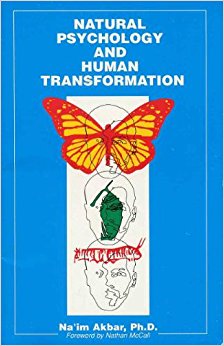
One of the books that made a particularly strong and life-changing impression on McCall was titled Natural Psychology and Human Transformation, by Na’im Akbar, a clinical psychologist and black Muslim.  The author likened the process of human transformation to that involving the maturation of a butterfly, with its three distinct stages.  The first of these, corresponding to the caterpillar, he called the “hungering self or soul” and it is characterized by a lifestyle dominated by desire and self-gratification.  The second stage, called “the self-accusing soul” is more contemplative, involving the activities of reflection and self-evaluation, where one steps back from the pervasive internal drives of passion, desire, and hunger, and the external conditioning that is empowered by these drives, and is able to develop both a real conscience, and a genuine (i.e., rational) consciousness.  This is akin to the chrysalis stage of the insect.  The final stage is that of the completed self.  It is a state of transcendence, in which one finds oneself more intimately connected to and concerned with the lives of one’s fellows, and a servant to a higher Truth.  This corresponds to the mature, winged butterfly, having emerged from its cocoon, and liberated from an existence confined to crawling. 


Image result for natural psychology and human transformation


It just so happened that I had been watching a video lecture series on mythology during the same time period that I was reading McCall’s book, and reading another book, titled The Hero with an African Face, on African mythology, which had been one of the recommended readings from that series.  I was intrigued by how McCall’s experiences – particularly during his darkest days – paralleled the African “rite of passage” myths that were described in that other book, as well as corresponding myths in other parts of the world that were described in the lecture series.  And as I reflected on my own youth, I could find a similar parallel, when my earnest desire to set my life right and start behaving like a responsible adult only arose after I had passed through a time of troubles: a personal “rite of passage”.  And I remembered “rite of passage” dramas that had played out in the lives of some of my friends, when they were about that same age.  I now wondered:  Is there something more to myths than just the fanciful tales that underlie the superstitions of primitive peoples? 

While reading Na’im Akbar’s book, Natural Psychology and Human Transformation, the following passage caught my attention:

Western psychology’s conclusion that the outer observable nature of the human being is the best and most accurate picture of the human being has led to many of the faulty expressions so prevalent in European-American life.  For example, people are thoroughly preoccupied with their material life as the essence of who they are.  There is minimal attention given to the mental, moral or spiritual aspects of life in the Western world.  In fact, the mental, moral and spiritual aspects gain their authenticity only as instruments of achieving certain material expressions. . . .

And a little later in the book, he continues:

There are a couple of assumptions which we must entertain in order to understand the concepts of “natural” psychology as opposed to Western “scientific” psychology.  One of these assumptions is that human beings are fundamentally spiritual entities whose physical forms are only reflections or a material expression of their true spiritual nature.  With this assumption, we understand that the physical form is always an incomplete picture of what the human being is all about.  So the limitations of ideas which guide our thought about material reality do not apply to spiritual reality.  For example, physical things fit within the narrow confines of time and space.  They can be understood as simple “cause and effect” relationships and can be validated by the five senses.  Spiritual “substance” is timeless, not confined to any single space, and its true nature can only be inferred from the physical manifestations.  Since this is the nature of spiritual reality then, the second assumption suggests that we can understand the spirit through another set of skills other than those used by scientific investigation.

There are ways of “knowing”  other than through the observational skill used in the scientific method.  One of these other observational methods is “intuition,” where there is an emotional cue based on some unobservable indication which comes to us through the unconscious. . . . These are not “objective” ways of knowing, but they guide much of what we understand about the world and especially about people.  In parts of the world that have not been consumed by reliance on the physical and the senses as its total source of information, “intuition” is accepted as a more valuable tool for “knowing” than “observing.”

The other method of observation to which we must turn in seeking to understand this spiritual nature of human beings is yet another method that has no credibility in the grafted psychology.  This method is “revelation,” which is of course a word of blasphemy in the scientific world of Western psychology.  To them, revelation is relegated to folklore and religion but it has no credibility in terms of so-called “objective” reality.  Most other cultures and people other than European-Americans have always given preeminent credibility to revelation.  In the Western world, such insights are described as superstitious at best and more likely considered in the same vein as the hallucinations of psychotics. . . .

Now, lest one be tempted to dismiss these as the ravings of an Afro-centric black Muslim against “European-American” (read, “white”) culture, it should be pointed out that these insights and conclusions echo those of another psychiatrist.  More than a quarter-century earlier, in Man and His Symbols, Carl Jung wrote:

                Because there are innumerable things beyond the range of human understanding, we constantly use symbolic terms to represent concepts beyond that we cannot define or fully comprehend.  This is one reason why all religions employ symbolic language or images.  But this conscious use of symbols is only one aspect of a psychological fact of great importance:  Man also produces symbols unconsciously and spontaneously, in the form of dreams.

Jung went on to observe that other cultures – particularly “primitive” ones – took dreams and visions very seriously, and did not simply regard them as, at most, symptoms of a disturbed mind.  He writes:

            What psychologists call psychic identity, or “mystical participation,” has been stripped off our world of things.  But it is exactly this halo of unconscious associations that gives a colorful and fantastic aspect to the primitive’s world.  We have lost it to such a degree that we do not recognize it when we meet it again.  With us things are kept below the threshold; when they occasionally reappear, we even insist that something is wrong.

                . . . We are so accustomed to the apparently rational nature of our world that we scarcely imagine anything that cannot be explained by common sense. . . .

Carl Jung, if not the first, is certainly the most famous of psychologists who have contended that there is more to the content of our dreams than just traces of repressed memories and desires, and hints of unresolved personal conflicts.


Image result for man and his symbols jung


Jung also took mythology very seriously, and later in Man and His Symbols he relates the story of a young girl who prepared a picture-book of drawings that she had composed and given as a Christmas present to her father, who happened to be a colleague of Jung’s.  The drawings were based upon a series of dreams that the girl had, and consisted of strange images, including angels, monsters, pagan dancers, the moon, and a variety of animals, and many of these images involved general motifs of creation, destruction, and transformation.  Although this collection of images comprised a Christmas present, Jung observed that none of the pictures had a Christian character about them, and that many of them seemed instead to allude to other philosophical, mythological, and even alchemical symbols.  The girl died of an infectious disease about a year after she had presented this gift to her father, and Jung suggests that the dreams represented an intuition on the girl’s part of her transformational journey from life to death which she was about to undertake.  This intuition, Jung believed, had been conveyed to her from her unconscious through archetypes not unlike those used in primitive myths to intuitively grasp the mysteries of life, death, and personal transformation.

And of the role of myth in personal transformation during one’s lifetime, perhaps the most famous exponent of this idea was Joseph Campbell, who appreciated Jung’s insights and applied them in his own lifelong study of mythology.  In The Hero with a Thousand Faces, Campbell talks of the estrangement of modern man and woman, with their puerile diversions and ambitions, from those ancient rituals which guided the human being to a sort of spiritual maturity.  “Apparently,” he writes, “there is something in these initiatory images so necessary to the psyche that if they are not supplied from without, through myth and ritual, they will have to be announced again, through dream, from within – lest our energies should remain locked in a banal, long-outmoded toy-room, at the bottom of the sea.”  And he continues:

The hero, therefore, is the man or woman who has been able to battle past his personal and local historical limitations to the generally valid, normally human forms.  Such a one’s visions, ideas, and inspirations come pristine from the primary springs of human life and thought.  Hence they are eloquent, not of the present, disintegrating society and psyche, but of the unquenched source through which society is reborn.  The hero has died as a modern man; but as eternal man – perfected, unspecific, universal man – he has been reborn.  His second solemn task and deed therefore . . . is to return then to us, transfigured, and teach the lesson he has learned of life renewed.

Image result for the hero's journey stages


Joseph Campbell, like Na’im Akbar, saw this process of transfiguration occurring in three stages.  But for Campbell, the stages of the hero’s journey are 1) a separation or departure from the familiar, commonplace existence to which one has been accustomed, 2) the encounter with trials or tests of initiation, and along with this, encounters with other (possibly supernatural) beings who help or hinder (or help, by hindering) the performance of these tests, and 3) return and reintegration, where the hero brings back the insights gained during the trial of separation (which in itself might present a new trial, if the world which is returned to is either unwelcoming, or unwelcomed, by the hero).  Campbell’s first and second stages roughly correspond with Akbar’s second, chrysalis stage (with Akbar’s first stage representing that of the hero before the journey of transformation is taken), while Campbell’s third stage of return and reintegration corresponds to Akbar’s final “butterfly” stage.

As I reflected on these things, I began to reappraise some of my longstanding personal attitudes about mythology.  I have always had a rather pragmatic view about the beliefs that people entertain, including their religious and mythological ones.  There are the things which we all hold to be definitely true, which includes scientific knowledge in modern times, but also those commonsense facts which have always been universally accepted as true.  Then there are the things which we (or some of us) believe might be true, which would include our superstitions, speculative science such as ESP, and even perhaps some or all of our religious beliefs.  (We might, for example, believe firmly in the Judeo-Christian God, but doubt if some or all of the stories in the Bible actually happened, like Jonah and the whale, or the Tower of Babel.)  There are things that we would like to believe, although we have never seen convincing or compelling evidence to justify those beliefs.  And finally, there are things which we simply accept are beyond the limits of our knowledge, at least for the present, although even here we might succumb to the temptation to make assumptions or suppositions in order to fill in some of the blanks.

And out of all this, each of us constructs a general belief about our life and our destiny, and the forces that govern these.  In addition to those concrete facts that we use to maneuver about in our day-to-day existence, there are those more ethereal beliefs that give us a purpose for living, and guide our process of setting goals.  We might, for example, believe in a beneficent Creator who answers our prayers, rewards the just, and punishes sinners – in the afterlife, if not always in this one.  We might believe in karma: What goes around comes around.  And we might believe that certain events or observations are imbued with a special importance – perhaps as signposts to guide us in how we live our lives.  In essence, these beliefs comprise a sort of personal mythology that provides us with hope, and confidence, and a feeling of individual importance.  But such a practice is not limited to individuals.  Entire nations, religious groups, and peoples, as well, invest themselves in collective beliefs about themselves that give them a sense of pride and destiny.

From Beliefs to Destiny (Picture from Uplift Connect)

But ultimately, this all comes down to what we have to believe, and what we choose to believe.  And sometimes our systems of beliefs are violently overturned.  When this happens, what often follows is a period of chaos and trauma – either personal or collective – and we are forced to try to either somehow restore the world view that failed us (with some necessary alterations that we hope will enable us to keep the core intact), or construct an entirely new one that (again, we hope) will serve us in the future.  But even here, the belief system is ultimately one of our own construction, designed explicitly to give us a meaning and purpose for our lives.  We are admittedly limited in our efforts, since we are forced to accept what we take to be those concrete facts of life, but beyond these, we have the latitude to pick, and choose, and interpret those ideas that rest upon speculation . . . or faith.

This, then, had always been my belief – about beliefs.  (A fuller exposition of this idea was presented in “The Final Call”, August 24, 2016.)  But as I began contemplating the insights presented in Na’im Akbar’s book, along with the more general ones about mythology and archetypal psychology by mythologists and Jungian psychologists, I began to wonder if there are other forces that guide – or can guide – the life of a human being beyond those that can be explained by simple cause-and-effect along with personal psychological pragmatism.

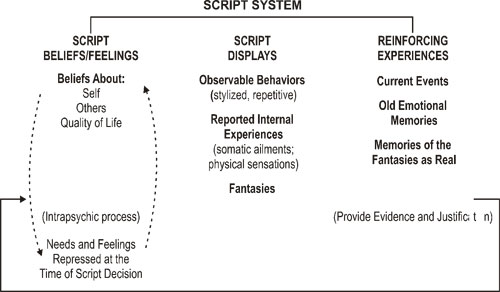
That our life course is guided by mental influences not readily apparent to our conscious mind is a generally accepted insight of modern psychology, which received its most eloquent expression in the psychoanalytic theories of Sigmund Freud and his principal followers (including, among others, Alfred Adler, Karen Horney, and, of course, Carl Jung).  An interesting variant of this idea was described in the works of psychiatrist Eric Berne – most famously in his 1964 bestseller, Games People Play: The Psychology of Human Relationships.  One of the insights in the book was that people tend to engage in stylized interactions with other people that they come into contact with, to pass the time in part, but also to meet the psychological needs of the participants for validation or approval.  At the very simplest level, these are the rote, stereotypical banter that occurs, for example, when we encounter an acquaintance in passing, or a coworker in the break room:

  • “How’s it going?”  “Great.  How’s it going with you?”
  • “How about that Patriots game last night?”
  • “It looks like more snow in the forecast.”

Image result for eric berne script analysis
From Games to Scripts


But at higher levels, these evolve into “mind games”, which are more involved interpersonal interactions that meet deeper psychological needs.  That a “game” is being played is evident by the fact that this is a behavior pattern or situation that one or both persons involved seem to find themselves in repeatedly.  For example, “Look what you made me do” is a game where one person tends to suffer a particular kind of misfortune that enables him or her to blame someone else for it and cause them to feel guilt and remorse.  It thereby enables the victim to make someone else feel culpable – even if only temporarily – for the circumstances of their life which make them feel unhappy or unfulfilled.  Games generally only constitute recurring episodes in one’s life, but there are much more complicated psychological dramas, called scripts, that could extend over days, years, or even a significant share of a lifetime.  Again, a clear sign that a script is in progress in one’s life is if it parallels some similar event or pattern of events earlier in that person’s life.  Although Berne’s book came out long before the movie Groundhog Day, in which a character finds that he is reliving the same day over and over again, it is suggesting the same kind of thing: that we reenact certain dramas in our life repeatedly until (or unless) we finally resolve the underlying conflict or unfulfilled psychological need.  A classic example is a person who has gone through multiple marriages, but each new spouse tends to have the same kind of faults (such as alcoholism, or a tendency to violence) so that each marriage exhibits the same kinds of problems as the previous ones.  Berne suggests that games and scripts are not merely limited to the individual, but can affect the conduct of peoples and nations, if not an entire civilization.

Groundhog Day

Is it possible that there are forces other than our personal psychological drives and accidental circumstances that guide – or could guide – our lives and our destiny?  This, I think, is what is being suggested by at least some of the mythologists: that there are things beyond the perceived universe of time and space, cause-and-effect, that, at least potentially, influence the course of our lives.  Dreams, myths, and visions, they suggest, are the means by which such influences reach us.  And those who are able to interpret these and respond to them can alter the course of their own lives, and perhaps the lives of others around them – perhaps even the destiny of entire peoples and nations.

It is certainly interesting to note that many of the individuals who shaped the course of nations seemed to believe this – believed that something, be it God, or Destiny, or some other source of inspiration and guidance, had called them to their mission in life.  Some have found inspiration in their particular religious beliefs and practices, or just in certain profound texts.  Gandhi, for example, drew inspiration from a number of such texts, particularly the Bhagavad Gita.  But it should be noted that not all who saw themselves as persons of destiny left a positive mark on the world.  For every Gandhi, there has been a Hitler, and between these extremes there have been leaders who brought both higher order and catastrophe, such as Alexander the Great, Julius Caesar, and Napoleon.  And some of the paths for obtaining profound insights seem to present special perils and risks of personal destruction, particularly the occultic ones.  Napoleon Hill, who devoted much of his early life to studying the beliefs and behavior patterns of the great leaders, inventors, and industrialists of his age, such as Thomas Edison, Henry Ford, Andrew Carnegie, Woodrow Wilson, Theodore Roosevelt, and Alexander Graham Bell, wrote that many of these successful men trusted in and believed that they drew from a transpersonal source of ideas and inspiration, which he labelled “Infinite Intelligence”.  Here, too, it could be argued that the successes and contributions that stemmed from the ideas of at least some of these men were also tainted with pernicious consequences, such as the unjust treatment of many of those employed in Carnegie’s steel mills.

Image result for star wars obi wan vs darth vader


It is disconcerting to think that the higher powers that guide us, both individually and collectively, might be amoral ones, and that when we try to draw inspiration from them, it might lead to either good or ill.  It brings to mind the mythology of the popular Star Wars movies, with “The Force” that has both a positive side and a dark side.  George Lucas, who was the original creator of this saga, was an admirer of Joseph Campbell and his theories of the hero’s quest as exemplified in the mythologies of our civilization.  And so perhaps it would be enlightening to return to Joseph Campbell, again, to provide a satisfactory answer to this question.  Campbell believed that that there was an ultimate, invisible source that “flowed life into the body of the world”, which he referred to as “the World Navel”, and that the hero’s special task is to unlock and release this flow for the benefit of humanity.  He writes, in The Hero with a Thousand Faces:

The World Navel, then, is ubiquitous.  And since it is the source of all existence, it yields the world’s plenitude of both good and evil.  Ugliness and beauty, sin and virtue, pleasure and pain, are equally its production. . . . Hence the figures worshiped in the temples of the world are by no means always beautiful, always benign, or even necessarily virtuous. . . . And likewise, mythology does not hold as its greatest hero the merely virtuous man.  Virtue is but the pedagogical prelude to the culminating insight, which goes beyond all pairs of opposites.  Virtue quells the self-centered ego and makes the transpersonal centeredness possible, but when that has been achieved, what then of pain or pleasure, vice or virtue, of our own ego or of any other?  Through all, the transcendent force is then perceived which lives in all, in all is wonderful, and is worthy, in all, of our profound obeisance.

For Campbell, then, the quest to lead a virtuous life, while both necessary and noble, is not the ultimate end of the hero’s journey, for the hero will discover, as part of that quest, that his or her greatest endeavors will never make a Heaven of this earth, or even of one’s own existence.  And yet, in spite of this, there will be a realization that the journey, and the endeavor, was ultimately worthwhile and life-affirming.

Returning to the life story of Nathan McCall, it was clear, by the end of the book, that his own hero’s journey, while leading to personal redemption for him, did not bring him into an earthly paradise.  He saw some of his friends from the old neighborhood attempt to make that same rite of passage that he had, and fail, backsliding into a life of crime and drug addiction.  And while he succeeded in escaping the crime-ridden environment of his youth, and entered a world that seemed to offer a comfortable middle class existence, he soon discovered that it was a world that did not open its arms to him in a welcoming embrace.  He now merely saw racism in a different light, in the subtle and often not-so-subtle behaviors of his white coworkers: their fears, and suspicions, and doubts of his abilities.  He saw some of his fellow blacks who had also made this transition get worn down, and eventually broken, by this pernicious atmosphere of pervading hostility, the unspoken message that “You’re not one of us.  You don’t belong here.  You don’t deserve to be here.”  But he persisted, and eventually discovered that among the “white devils” that he had been raised to distrust, and even hate, in his youth, there were some who he could learn to trust, and even to like.

Related image


The hero’s journey never ends, and with every success comes new perils, and challenges to overcome, and perhaps even new rites of passage to undergo.  Each of us, in our own way, if we truly aspire to be the hero or heroine of our own personal story, must find the invisible hand that will guide us through the trials and passages in our life, and thereby enable us to “flow life into the body of the world”.